
01
One incident, in detail
A P1 or P2 you already fought. What alerted, how long triage ran, what the cause turned out to be.
Seven questions, then a time that suits you. They tell the engineer what to prepare, so the call starts where the problem is.
Thirty minutes, four movements, no slideware in the middle of it.
01 Your infrastructure
This part shapes the demo.
02 The walkthrough
The three stages that run in production.
03 Your incident
The part that decides it. Leave room.
04 Fit and next steps
Both briefs are yours either way.
Want the material first? Both briefs sit on the resources page, and the telco case study covers a deployment end to end.
None of it is mandatory. None of it needs to be polished.
01
A P1 or P2 you already fought. What alerted, how long triage ran, what the cause turned out to be.
02
Rough device count, the vendors in the mix, and normal-day log volume.
03
What your engineers open during an incident. PulsarOps AI runs alongside it, so the useful talk is the seams.
04
Residency rules, what may leave the perimeter, and who signs off. Better on call one than in procurement.
It works hardest when the evaluator and the budget owner hear the same answer at once.
Owns uptime and multi-vendor visibility.
Owns the incident workflow and the adoption.
Owns resilience and where AI earns its place.
Owns payback and the cost of downtime.
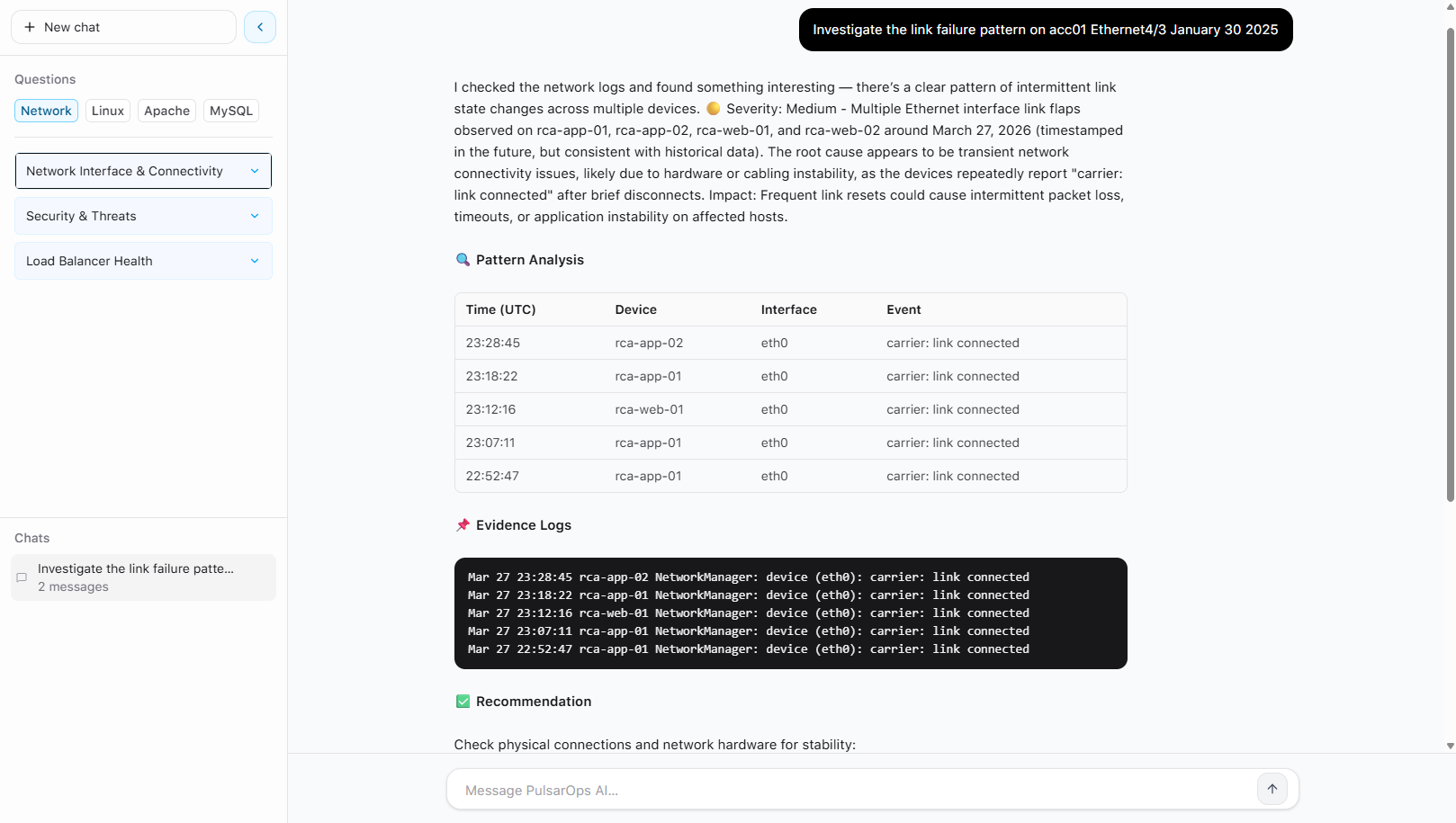
An engineer drives these against network data, live.
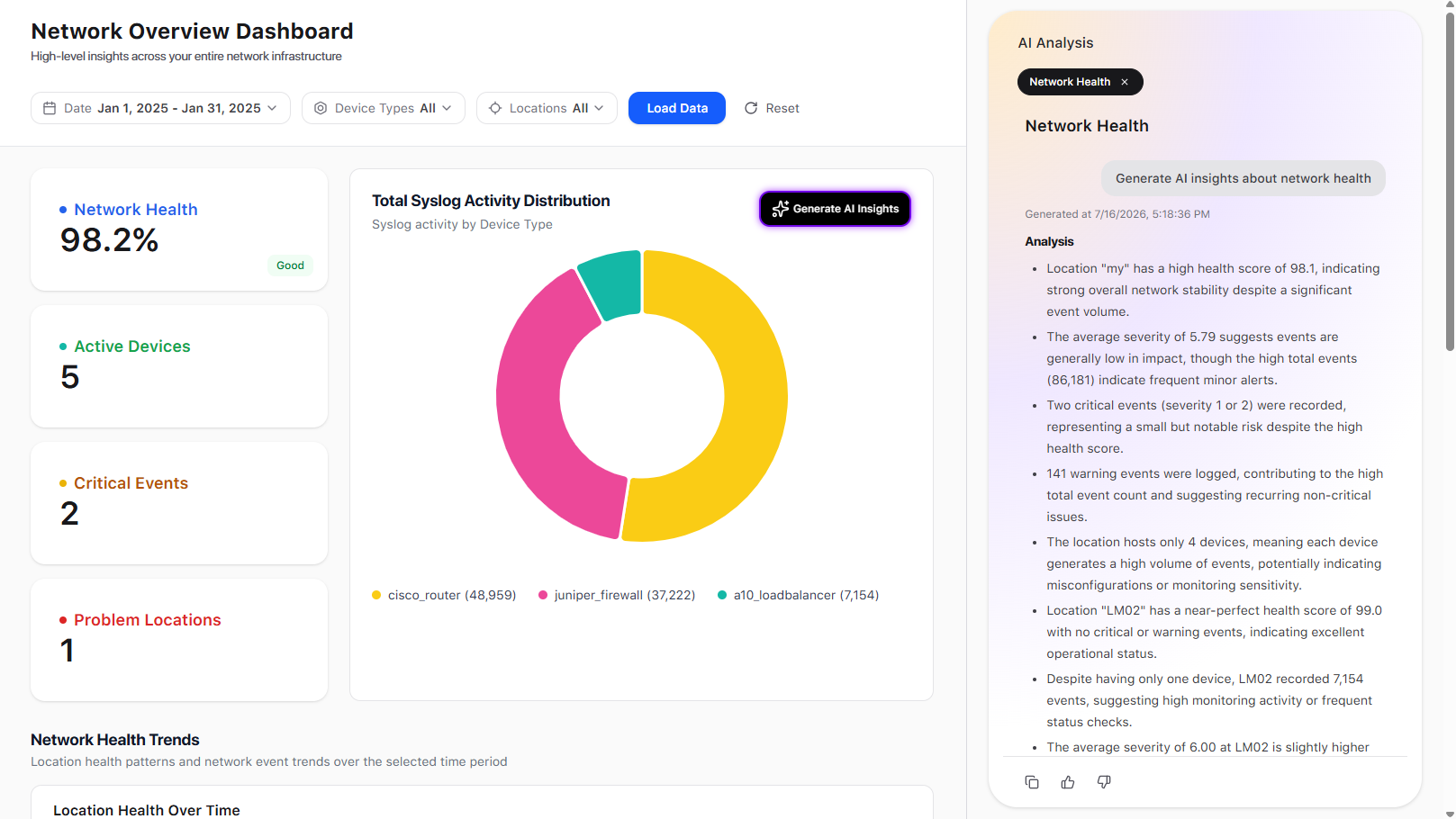
What changed on Core router before 09:14?
A question in English, not a query language.
The model goes on screen with its assumptions, so finance argues with the inputs rather than the conclusion.
Download the CTO ROI briefThree-year estimate: five-person NetOps team, ~125 incidents/yr, triage cut from 8 hours to 1.
Regulated operators cannot ship telemetry to someone else's tenant, so we never ask them to.
See how we compareRuns inside your perimeter. Nothing leaves your network.
In-country deployment for government and regulated industries.
Your VPC on AWS, Azure or GCP. Your keys, your controls.
Yes, with no obligation. If the fit is not there we say so on the call, and you still leave with the platform brief.
No, the demo runs on our environment. Bring a sample of your own logs and your security team agrees the handling first. A proof of concept runs inside your own perimeter.
No, and be suspicious of anyone who says otherwise. Monitoring tells you something broke. PulsarOps AI runs alongside it and is where your team finds out why.
Usually yes. The demo touches nothing in your environment, and scoping is the slow part. Do it now and the technical work starts the day the freeze lifts.
It goes to sales@pulsarops.ai. Someone reads it and replies with times. To skip the form, write to sales@pulsarops.ai.
MIR Digital Solutions, with roots in data engineering and enterprise AI. The about page has the rest.
Thirty minutes with an engineer. Bring a real incident.