
PulsarOps AI Book a demo
Who it is for

Built for infrastructure where nothing fails in isolation

Many vendors, more alerts than anyone can read, and a business that notices the moment service slips. Event intelligence, on your own infrastructure.
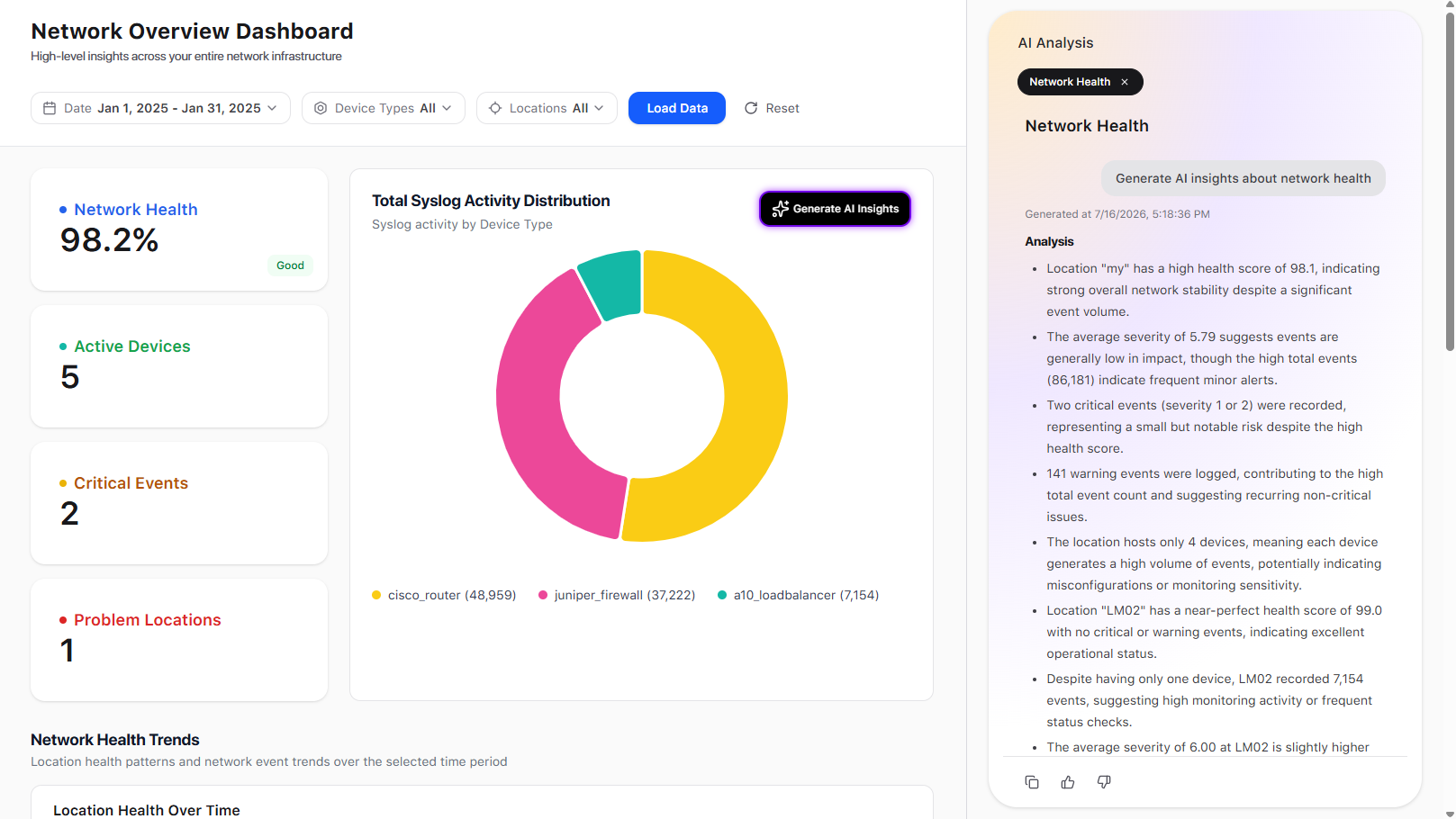
Network overview
PulsarOps AI network overview dashboard showing device health, interface error trends and correlated events across multi-vendor infrastructure.
The profile

You will recognize your infrastructure in this list.

Industry matters less than shape. If you recognize your infrastructure in this list, the rest of this page is written for you.

  • Complex IT and network infrastructure
  • Multi-vendor network environments
  • High volumes of alerts, incidents and logs
  • High or inconsistent Mean Time to Resolution
  • Multiple siloed monitoring and operational tools
  • Engineers correlating logs across systems by hand
  • Business-critical uptime requirements
  • Efficiency gains without adding headcount
  • Private or on-premises deployment

See how the platform answers each of these

Enterprise NOCs worldwide

thousands of devices

Built for thousands of devices, millions of logs.

Industry 01

Telecommunications

The most vendors, the most events, and the least room for a slow answer.

Where it started

A major North American provider came to MIR Digital Solutions to modernize network operations.
  • Troubleshooting fragmented across teams and consoles.
  • Multi-vendor infrastructure with no single view across it.
  • Reactive vulnerability management.

What changed

  • Event correlation automated instead of assembled by hand.
  • Visibility across the whole multi-vendor infrastructure.
  • Proactive vulnerability intelligence.
  • Conversational troubleshooting for every engineer on shift.

Read the telco case study

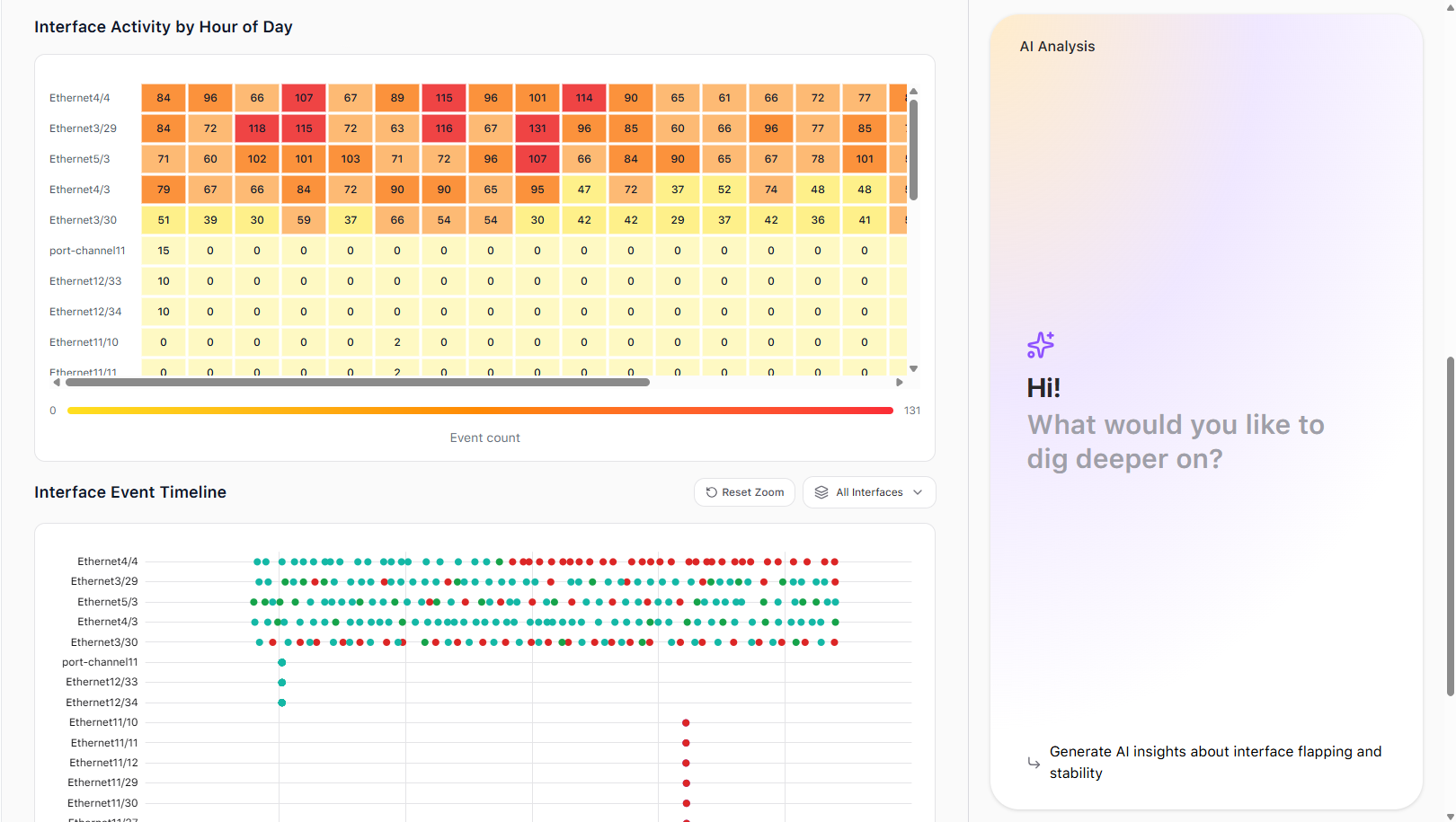
Interface analysis
Interface analysis view charting error and discard trends per interface over time.
Industry 02

Financial services

Uptime and private deployment carry the weight here. Both are answered by where the platform runs.

Private by requirement

Runs inside your perimeter or your own VPC, with your keys and your controls.

Uptime the business feels

Correlation and root cause arrive with the alert, not at the end of a manual investigation.

Siloed operational tooling

PulsarOps AI runs alongside your existing systems and converges their data into one pane.

Read the deployment and security detail

Industry 03

Retail

Operational data keeps growing. The operations team does not.

In scope when these are true

  • High volumes of alerts, incidents and logs.
  • Engineers correlating across systems by hand.
  • Business-critical uptime requirements.
  • Efficiency gains without adding headcount.

We would rather walk through a real incident than guess at your infrastructure from the outside.

Bring us a real incident

What absorbs the growth

  • ML-based log classification
  • Multi-device correlation
  • Agentic RAG assistant
  • Early-warning trends
  • Root cause and next steps

Reading millions of events by type and frequency scales badly with people. That is the part the platform takes.

Industry 04

Oil and gas

Distributed, heavily regulated, and often bound by in-country data rules that rule out a cloud-only approach.

01

Many vendors, one pipeline

Ingest is vendor-agnostic and multi-protocol, so nothing gets normalized by hand first.

02

Sovereign and in-country

The data stays where the regulator says it stays. The platform comes to the data.

03

Uptime with real consequences

Early-warning trends surface degradation before it becomes an outage.

Industry 05

Data-intensive enterprises

The defining trait is volume. When the data outgrows the people who can read it, another dashboard does not help.

The problem is not access to the data

Most teams here can already reach every log they need. Getting intelligence out of it is the slow part.
  • Millions of events sorted by type and frequency before anyone reads a line.
  • Similar events grouped, so one incident reads as one incident.
  • Plain-language questions answered with the evidence attached.
  • Flat pricing, so the bill tracks your team and not your data volume.

Why ingest-based pricing breaks at this volume

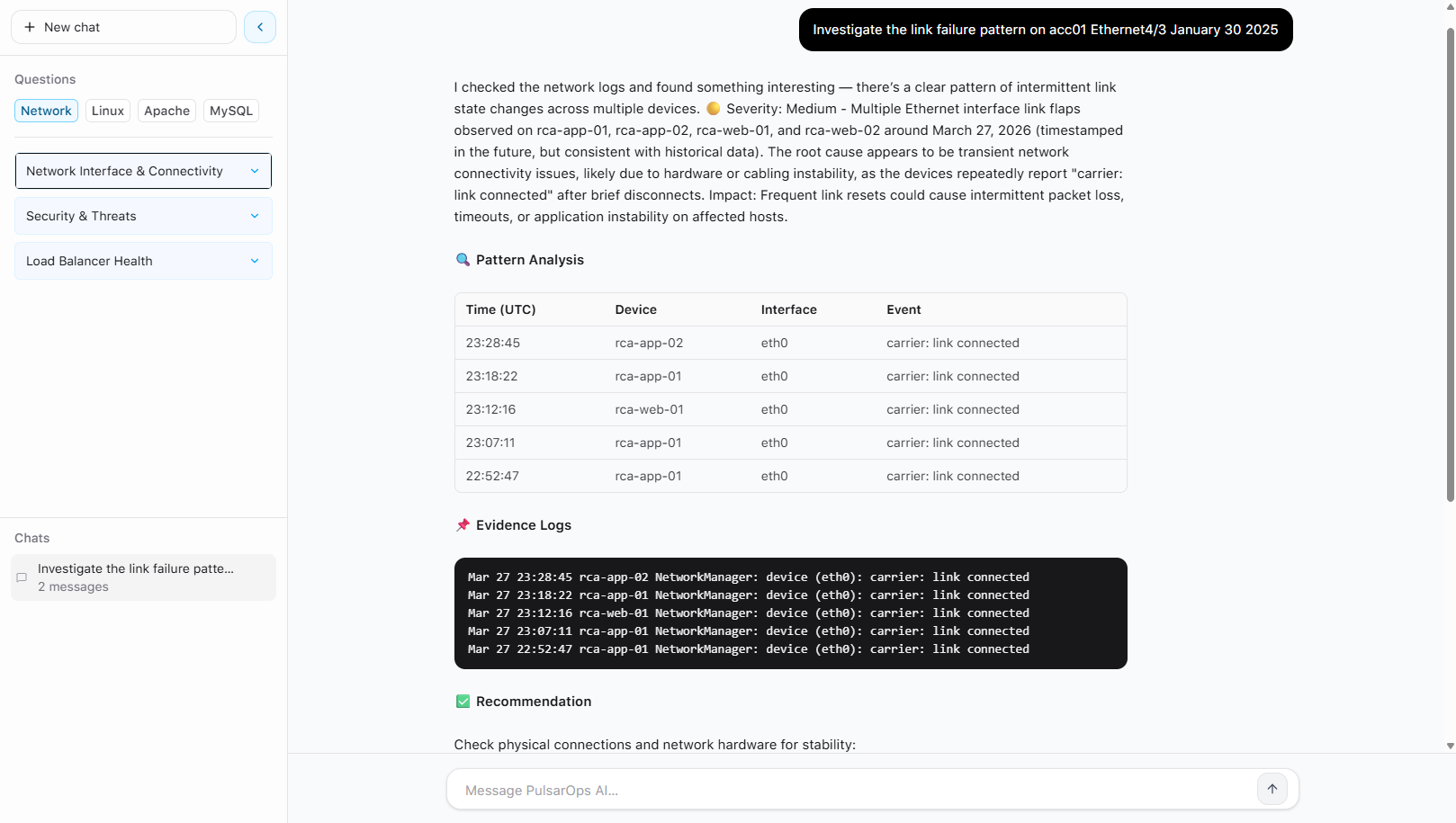
AI assistant
AI assistant panel answering a network health question with a written summary and supporting log evidence.
Industry 06

Data centers and critical infrastructure

Including the engineering and construction organizations that build them. We treat it as one account-level vertical.

Our positioning here is deliberately narrow

An intelligence layer for understanding complex infrastructure and investigating operational issues. We validate the exact use case with each organization.

Potential pain points

Discovery should establish which of these are true.

  • Complex environments with multiple technology vendors.
  • Fragmented operational information and large data volumes.
  • Difficult handover between projects and operations.
  • Troubleshooting complexity against high uptime requirements.
  • Difficulty understanding dependencies between systems.

Stakeholders in a typical account

  • Technology leadership
  • Data center operations
  • Network and infrastructure
  • Engineering leadership
  • Digital infrastructure teams
  • Operations teams
  • Project and commissioning

Seven possible seats at the table. This runs as an account, not as one conversation.

Devices in the infrastructure live

quietfailing

Heat gathers where the fault is, not everywhere.

Buying team

The executives who sponsor it.

The strategic case and the financial case are different arguments.

Persona 01

Chief Technology Officer

Strategic decision maker and executive sponsor

The conversation is about moving from reactive troubleshooting to an operating model where context arrives with the incident.

Key pain points

  • Rising infrastructure complexity and high MTTR.
  • Fragmented visibility across disconnected systems.
  • Difficulty scaling IT operations.
  • Pressure to show meaningful AI adoption.
  • Business exposure caused by downtime.

Questions that get the CTO's attention

  • How much operational complexity have you added in three years?
  • Is your operations strategy getting more proactive, or just adding more monitoring?
  • How much business risk is tied to slow incident resolution?
  • Can operations scale without headcount rising at the same rate?

Themes: operational resilience, unified intelligence, reduced downtime risk, scalable operations.

Persona 02

Chief Financial Officer

Financial buyer and budget approver

Downtime reaches revenue, productivity, SLA performance and reputation.

Key pain points

  • High operational costs and the financial impact of downtime.
  • Rising IT expenditure.
  • Expensive engineers doing repetitive investigation.
  • Unclear ROI from AI initiatives.
  • Infrastructure growing faster than productivity.

Questions that get the CXO's attention

  • What does an hour of service downtime cost the organization?
  • How many engineering hours go into investigating incidents each month?
  • What return are current AI initiatives generating?
  • Could the same team manage more infrastructure if investigation were faster?

Metrics worth pulling first: MTTR, incidents per month, hours spent investigating, cost per incident.

Buying team

The operations leads who have to live with it.

Both are measured on numbers that only move when investigation itself gets faster.

Alert queue by arrivalby severity

  • Core routerinterface downP1
  • Edge firewallsession table fullP1
  • Aggregation Auplink flappingP2
  • Load balancerpool member downP3
  • Access Aport errors risingP4

Severity orders the queue.

Persona 03

Director of Networks

Primary technical evaluator and operational champion

The hook is faster root cause analysis, because that is what the role is judged on.

Key pain points

  • High MTTR and alert overload.
  • Manual log correlation across vendor systems.
  • Difficult root cause investigation.
  • Engineers switching consoles mid-incident.
  • Limited cross-network visibility.

Questions that get their attention

  • How many systems does an engineer open during an incident?
  • How long from alert to probable root cause?
  • How much troubleshooting knowledge lives only in senior heads?
  • How easily can engineers investigate across vendors?

Best engagement is a live demonstration on a real incident. They do not buy from a slide.

Persona 04

Director of IT Operations

Technical evaluator and implementation leader

The hook here is workflow efficiency rather than raw capability.

Key pain points

  • Fragmented tooling and tool fatigue.
  • Manual troubleshooting against high incident volumes.
  • Inconsistent workflows and slow escalation.
  • Cross-team silos and limited context.
  • Difficulty scaling IT operations.

Questions that get their attention

  • How many systems does your team use during a typical incident?
  • Where are the largest bottlenecks in your incident workflow?
  • How consistent is troubleshooting across shifts?
  • What would faster investigation do to your team's capacity?

Several engineers and sysadmins work in the platform at once, which is what makes a consistent workflow across shifts possible.

The business case

What changes when investigation stops being manual.

Modeled over three years on a real deployment shape.

Download the CTO ROI brief
Incident recovery
50-75%
faster incident recovery
Return on investment
228%
annualized ROI
Payback
3.7 mo
payback period
Cost efficiency
2-4x
more cost-efficient over three years

Three-year estimate: five-person NetOps team, ~125 incidents/yr, triage cut from 8 hours to 1.

  • Catch issues before they reach customers.
  • Get real-time insight and next steps for networks and applications.
  • Reduce technical recovery time by up to 50 to 75%.
  • Move engineers from reactive firefighting to proactive operations.
  • Deploy on-premise to meet data sovereignty and compliance requirements.
  • Achieve 228% annualized ROI with a 3.7-month payback period.

Three-year estimate: five-person NetOps team, ~125 incidents/yr, triage cut from 8 hours to 1.

Deployment

Wherever your data has to stay.

For most of the industries above, private deployment is a condition of the deal rather than a preference.

Read the security detail

On-premise

Runs inside your perimeter. Nothing leaves your network.

Sovereign-ready

In-country deployment for government and regulated industries.

Cloud-agnostic

Your VPC on AWS, Azure or GCP. Your keys, your controls.

pulsarops.ai / explainer
Book a demo

Bring the questions from your own industry.

Thirty minutes with an engineer. Bring the CTO, the operations lead and a real incident.